by Anneke_e | Oct 20, 2026 | Publication
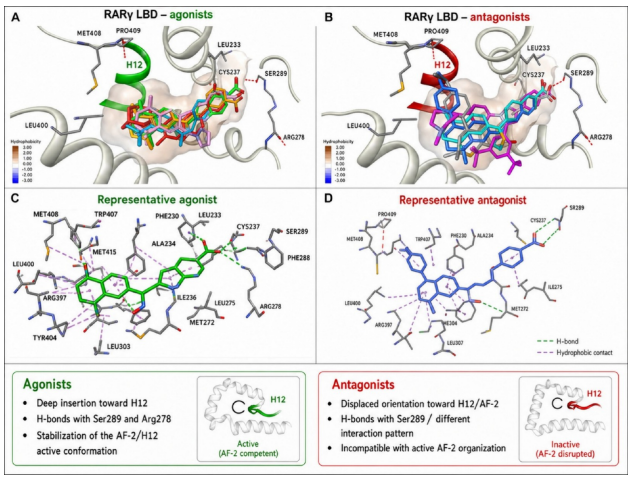
Synthetic ligands can switch RARγ and the vitamin D receptor (VDR) on or off, but what separates an agonist from an antagonist is not fully understood. This study uses docking, molecular dynamics simulations and binding-energy calculations to compare nine RARγ ligands...
by Anneke_e | Oct 6, 2026 | Publication
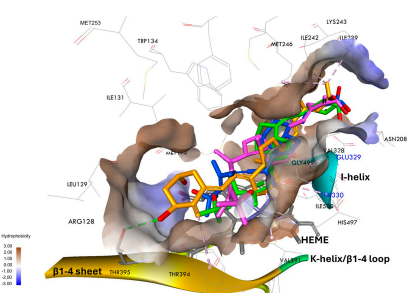
The active form of vitamin D3 (1,25D3) has anticancer potential, but its clinical use is limited by calcemic side effects and rapid breakdown by cytochrome P450 enzymes. This study characterises new vitamin D analogs (PRI-1927, PRI-1937, and PRI-1938) with extended,...
by Anneke_e | Oct 6, 2026 | Publication
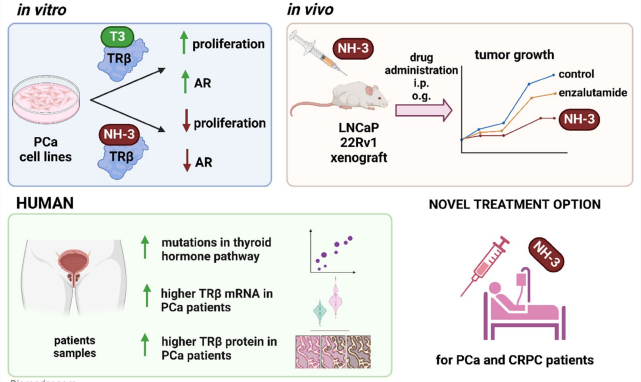
Thyroid hormone signalling has been linked to prostate cancer, but the role of its main effector, thyroid hormone receptor β (TRβ), was unclear. This study conducted by Fesiuk et al. shows that the TRβ-selective antagonist NH-3 inhibits prostate cancer cell...
by Anneke_e | Oct 6, 2026 | Publication
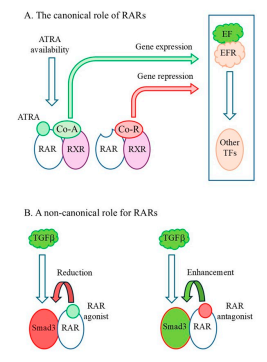
Retinoic acid receptor γ (RARγ) is expressed mainly in stem and progenitor cells and helps control whether they maintain stemness or develop. This review by Geoffrey Brown draws on haematopoiesis, embryonic development, and the generation of induced pluripotent stem...
by Anneke_e | Oct 6, 2026 | Publication
Retinoic acid receptor γ (RARγ) is selectively expressed by normal stem cells and is needed to maintain them. This review argues that cancer cells, particularly cancer stem cells, have hijacked this role. RARγ is overexpressed in cholangiocarcinoma and in colorectal,...
by Anneke_e | Oct 6, 2026 | Publication
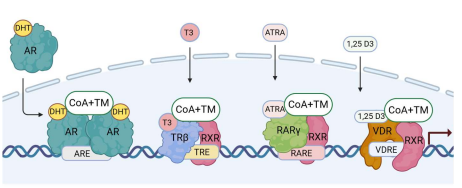
Androgen deprivation therapy is the core treatment for prostate cancer, but many patients progress to castration-resistant disease. This review examines four nuclear hormone receptors as additional targets, the androgen receptor (AR), thyroid hormone receptor β (TRβ),...
