
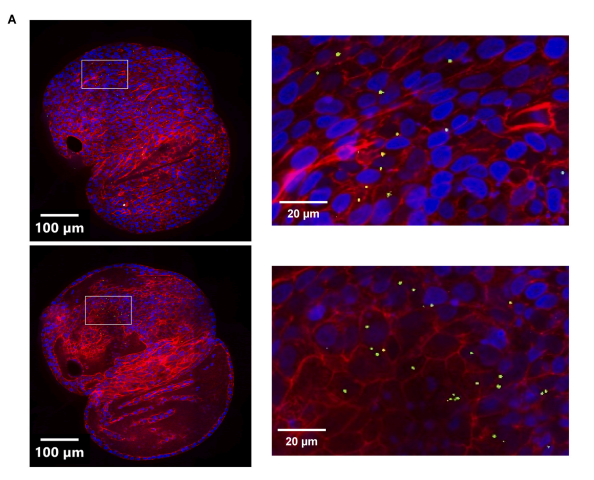
In this study, Ernhofer et al. investigated the effects of polystyrene micro- and nanoplastics (PS-MNPs) on non-malignant and malignant lung cell models, as well as patient-derived lung organoids. While exposure to environmentally relevant concentrations did not significantly affect cell viability, polystyrene nanoplastics (PS-NPs) were readily internalized by lung cells, with non-malignant bronchial-epithelial cells showing the highest uptake.
PS-NP exposure induced increased cell migration, oxidative stress, DNA damage, and cell cycle disturbances, particularly in non-malignant lung cells. Furthermore, these cells exhibited altered DNA repair capacity and activation of key pro-survival and mitogenic signaling pathways, including AKT and ERK. Similar signaling responses were confirmed in human lung organoid models.
The findings suggest that nanoplastic exposure may trigger cellular processes associated with genomic instability and disease susceptibility in healthy lung tissue. Notably, non-mlignant lung cells appeared more vulnerable to PS-NP-induced stress responses than established lung cancer cells, highlighting a potential role of nanoplastics in early pathogenic events within the respiratory system.