
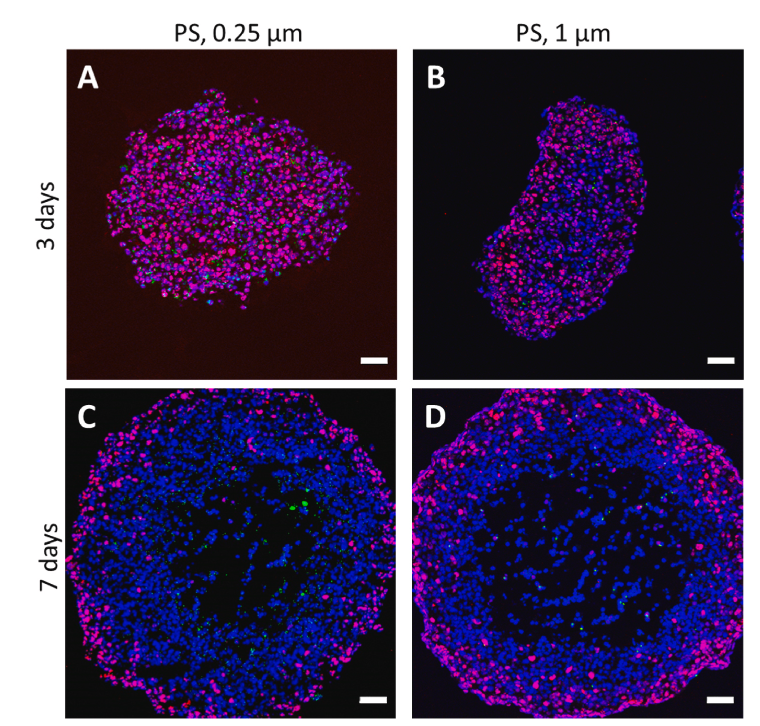
The gastrointestinal tract represents a primary route of daily human exposure to micro- and nanoplastics, yet their behavior within tumor cells remains poorly understood. Brynzak-Schreiber, Schögl et al. investigated the uptake, intracellular distribution, and functional effects of polystyrene micro- and nanoplastics (PS-MNPs, 0.25–10 µm) across four human colorectal cancer cell lines (HT29, HCT116, SW480, and SW620). They found size- and concentration-dependent uptake of PS-MNPs across all cell lines, with sub-micron particles (<1 µm) localizing within lysosomes and accumulating preferentially in the non-proliferating regions of 3D tumor spheroids. Notably, the smallest particles tested (0.25 µm) were passed on to daughter cells during cell division and increased cancer cell migration, suggesting a potential pro-metastatic effect. These findings provide direct evidence that ingested microplastics can persist within cancer cells across cell division and functionally influence tumor cell behavior relevant to metastasis.