
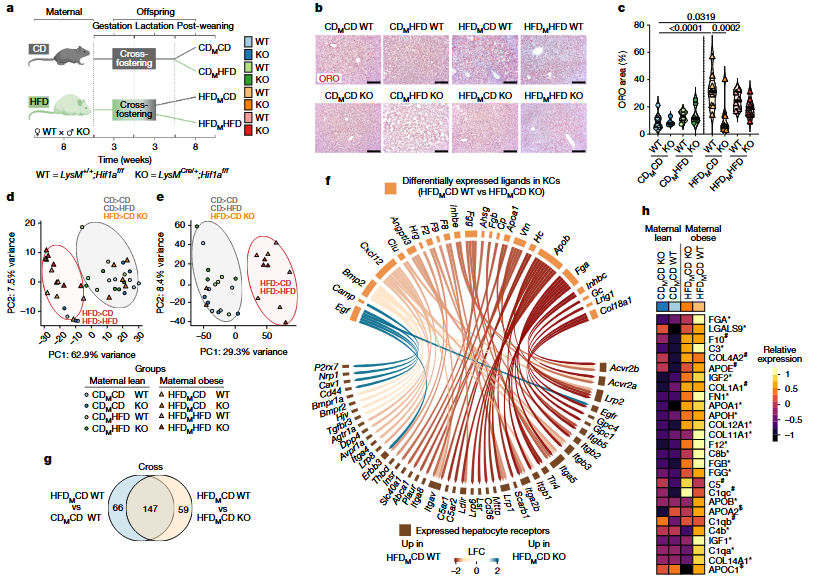
Kupffer cells (KCs), the liver’s yolk sac-derived resident macrophages, acquire tissue-specific functions early in embryogenesis and remain essential throughout life for liver metabolism and homeostasis. Huang, Balzer et al. show that maternal obesity in mice reprograms fetal KCs via increased nuclear translocation of HIF1α at birth, driving a persistent metabolic shift from oxidative phosphorylation to glycolysis. Despite this altered, pro-inflammatory phenotype, fate-mapping confirmed that these “programmed” KCs remain of yolk sac origin rather than being replaced by monocyte-derived cells, distinguishing this model from postnatal diet-induced fatty liver disease. Mechanistically, programmed KCs upregulate secreted apolipoproteins (APOE, APOA1) and coagulation factors that act in a paracrine manner to drive lipid uptake in neighbouring hepatocytes, causally producing fatty liver disease in the offspring. Myeloid-specific deletion of Hif1a during gestation, or depletion and replacement of KCs with monocytes from unexposed donors, both rescued the phenotype, establishing developmentally programmed KCs as causal, targetable intergenerational messengers linking maternal metabolic health to offspring liver disease.