
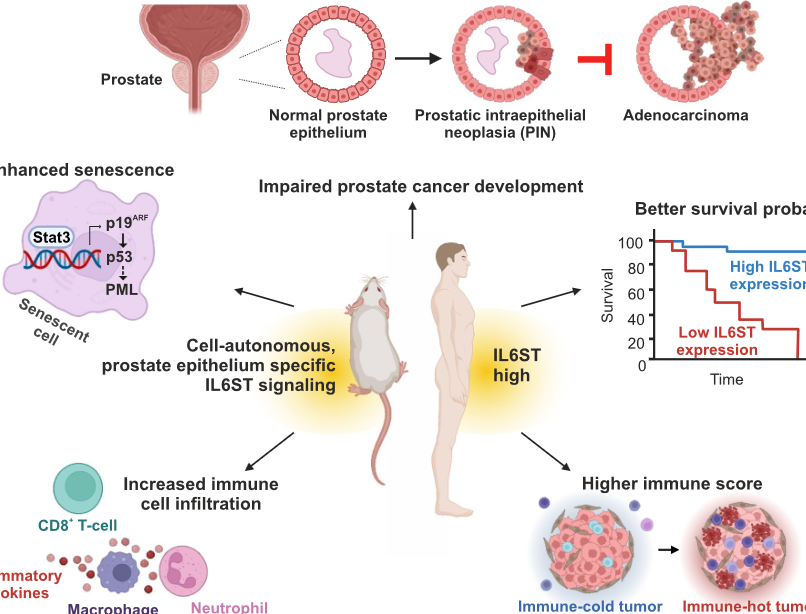
Prostate cancer is the second most commonly diagnosed cancer in men, and IL6ST/STAT3 signaling has been implicated in the progression of several tumor types, yet its specific role in prostate cancer had remained poorly defined. Sternberg et al. addressed this by constitutively activating IL6ST signaling in the prostate epithelium of a Pten-deficient mouse model, combined with transcriptomic and multiplex histopathological analyses, and by examining IL6ST expression across large prostate cancer patient cohorts. Contrary to its pro-tumorigenic role in other cancers, genetic activation of IL6ST in this model triggered STAT3/ARF/p53-driven cellular senescence, recruited cytotoxic T-cells, and significantly suppressed tumor progression. Consistent with these findings, high IL6ST mRNA expression in prostate cancer patients correlated with improved recurrence-free survival, elevated senescence signals, and a shift from an immunologically “cold” to “hot” tumor microenvironment, highlighting IL6ST as a potential context-dependent tumor suppressor and therapeutic target in prostate cancer.